

The Australian government has launched an exciting initiative for Indian university graduates and early career professionals, offering them a chance to live and work in Australia for two years. This opportunity comes under the Mobility Arrangement for Talented Early Professionals Scheme (MATES), a special program aimed at fostering professional growth and cross-cultural exchange.

What is the MATES Program?
MATES provides Indian graduates and young professionals with a two-year residency and work opportunity in Australia. The program is designed to offer valuable experience in various high-demand fields, allowing participants to expand their skills and build professional networks.
Key highlights of the program:
- No sponsorship from an Australian employer is required to apply.
- Visa holders have 12 months to make their first entry into Australia and can stay for 24 months from the date of first entry.
- The visa allows multiple entries to Australia.
Additionally, participants can apply for extensions or transition to other temporary or permanent residency visas if they meet the necessary eligibility requirements.
Who Can Apply?
The MATES program is tailored for Indian nationals meeting the following criteria
Age: Applicants must be aged 30 or younger at the time of application.
Education: Candidates must have graduated within the last two years from an eligible educational institution.
Fields of Study: Applicants must hold at least a bachelor’s degree or higher in one of the following fields:
- Renewable Energy
- Mining
- Engineering
- Information Communications Technology (ICT)
- Artificial Intelligence (AI)
- Financial Technology (FinTech)
- Agricultural Technology (AgriTech)
English Proficiency: An overall IELTS score (or equivalent) of at least 6, with a minimum of 5 in each component.
Benefits of the MATES Program
- Professional Growth: While there’s no strict requirement to work in the nominated field of study, the program encourages participants to gain experience in their specialized sectors.
- Flexibility: Participants’ dependents (spouses and children) can join them in Australia with work rights, adding convenience and support for young professionals.
- No Employer Sponsorship Needed: Applicants don’t need a job offer or employer sponsorship to apply, making it more accessible for qualified individuals.
- Pathway to Permanent Residency: Participants can explore options to extend their stay or transition to permanent residency based on their eligibility.
MATES Program as a Pilot
Launched in late 2024 as a pilot program, MATES offers 3,000 places annually for primary applicants. The program is expected to open doors for thousands of talented young professionals, fostering collaboration and innovation in key industries.
Dependents of MATES participants won’t count towards the program's annual cap, ensuring ample opportunities for primary applicants.
Why Choose MATES?
Australia is a global leader in technology, mining, renewable energy, and agriculture, making it an ideal destination for professionals in these fields. The MATES program not only provides career opportunities but also supports cultural exchange, helping participants broaden their horizons and develop globally relevant expertise.
For Indian graduates looking to kickstart their careers on an international platform, MATES is a game-changing opportunity. With its flexible terms and strong emphasis on professional growth, the program is a gateway to success in a highly competitive global landscape.
Final Thoughts
The Mobility Arrangement for Talented Early Professionals Scheme (MATES) offers a unique chance for Indian graduates to live and work in Australia without the need for employer sponsorship. As Australia continues to invest in sectors like AI, renewable energy, and ICT, this program is a step forward in fostering collaboration between the two nations.
If you’re a young Indian professional eager to gain international experience and grow your career, don’t miss the opportunity to apply for the MATES program and embark on an exciting professional journey in Australia!
to interact with this post.
Social.
Snapshot.
Instantly create a share-worthy social post for this post.

Explore similar content

Is India Ready for Tourism? The Good, the Bad, and the Ugly
India, a land of rich culture, diverse history, and breathtaking landscapes, has shown remarkable growth as a tourist destination over the past decade. From the serene Himalayas to the sun-kissed beaches of Goa, India offers something for every traveler. However, despite its potential, the question remains: Is India truly ready for tourism? Let’s explore the positives and negatives to understand where India stands.

Comfort Zone
The comfort zone is a very controversial topic to discuss. It is something that people chase from the moment they are born. People work hard, earn money, buy homes, and do whatever they can so that they can live a comfortable life in the end. Throughout their lives, people keep chasing comfort.

How India's Traffic Congestion Impacts the Economy and Key Sectors
India's major cities are grappling with severe traffic congestion, which slows down economic productivity and increases business costs. With average speeds in cities like Kolkata, Bengaluru, and Pune ranging between 17-20 km/h, the economic impact is substantial. If average speeds were increased by 50%, it could drive significant economic growth by reducing fuel consumption, improving logistics efficiency, and boosting worker productivity.

India sees record $80.62B in FDI as tech giants commit big
India is poised for robust foreign direct investment growth in 2026, building on a record USD 80.62 billion in FDI inflows during 2024-25. The optimism stems from major investment commitments by global technology giants, newly implemented trade agreements, and sustained government reforms aimed at improving ease of doing business.

India offers final trade proposal to remove 50% US tariffs
India announced reforms on Wednesday to simplify import quality checks, the latest effort to break a months-long deadlock with Washington over punitive tariffs that have reached 50 percent on Indian goods.
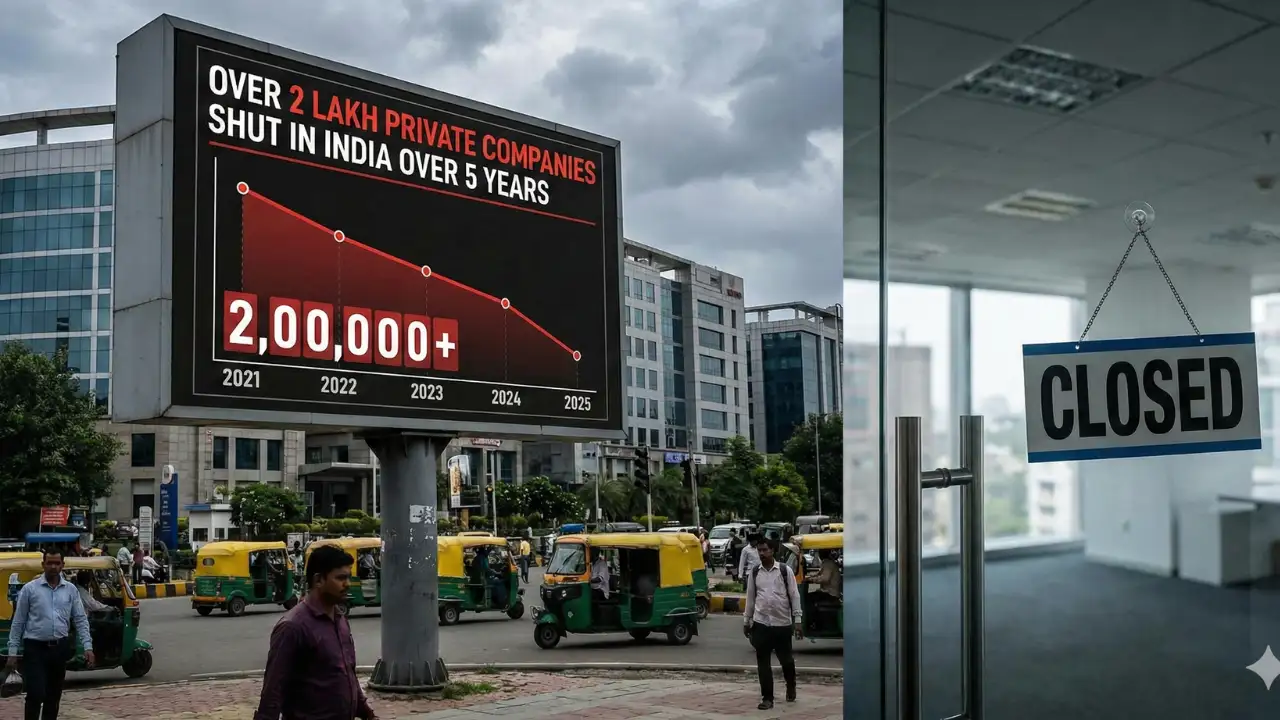
Over 200,000 companies shut down in India's five-year regulatory sweep
More than 204,000 private companies have closed in India over the past five years, the government revealed Monday in Parliament, marking one of the most extensive corporate clean-up operations in the country's history. The shutdowns, which occurred between 2020-21 and 2024-25, were driven by a combination of business consolidation, regulatory non-compliance, and government enforcement actions under the Companies Act, 2013.