

When you build software, your time and technical expertise are your most valuable assets. Recently, my team encountered a harsh reminder of what happens when clients fundamentally disrespect that time. I’m sharing this incident to caution fellow developers about the realities of upfront work and dealing with deeply unprofessional clients.

How it all started?
In January, we engaged with a company called Downtown Realtyj Private Limited, a Patna based startup operating in real-estate sector. Our primary point of contact was Yogesh Jaiswal (YJ), marketing & sales head of the company.
During our initial discovery phase, we explicitly asked YJ why they didn't just adopt an established, off-the-shelf CRM from the market. His reasoning seemed ambitious but sound at the time, he wanted a proprietary internal tool, specifically citing how SquareYards utilizes their own custom CRM. Furthermore, he was highly focused on data protection, insisting on setting up locally installed servers at their company to keep everything strictly in-house.
After few office meetings and discussions, YJ gave us a one-week deadline to design the UI for several key pages, framing it as a trial phase before we proceeded with the full development build.
Putting the work: A week of design and planning
Taking the timeline and the scope seriously, we structured our team to deliver.
Dave Augustus, our CEO and the most senior member of our team, spearheaded the business and architecture side. He engaged directly with YJ in constant Google Meet discussions, dedicating his time to meticulously mapping out the project descriptions, technical requirements, and building out the quotations.
Meanwhile, my colleague Shivam v and I took full ownership of the design. We poured an entire week of focused effort into architecting and drawing the CRM's user interface from scratch in Figma.
The Plot Twist
When it came time to present the final Figma designs in office settings, YJ brought his colleague, Yash Tiwary (Management Head), into the loop. The reception was incredibly positive. Yash explicitly liked the UI we had drawn up and directed us to send over the final quotation along with the full requirements to kick off the build.
Thinking we had successfully secured the partnership, Shivam and I went to their office after two days to meet with YJ and finalize the details. Instead of a project kickoff, we walked into a bizarre and deeply disrespectful scenario.
YJ was nowhere to be found. Yash Tiwary was there to meet us, but what he did next was completely inappropriate. As we approached the conference room, Yash explicitly told Shivam to stay outside and wait, pulling me into the room alone. Leaving a key team member and designer waiting outside the door was not just rude, it showed a complete lack of basic business etiquette.
Once inside, his excuse for halting the project entirely was just as frustrating. He stated that while he had no issue paying the quoted amount, "software always has bugs, always has room for improvement, and you always need to pump money into it." With a hollow apology for the "inconvenience," he killed the project right there on the spot. We had just dedicated senior executive time and a week of design labor to them, and they were pulling out because they suddenly realized software requires maintenance.
When we finally got ahold of YJ, he simply washed his hands of it and said Yash's decision was final.
Conclusion: Lessons learned the hard way
This wasn't just a lost contract; it was a profound display of unprofessionalism and a complete disregard for our labor.
- Etiquette is Everything Business deals fall through all the time, and that is just part of the industry. Whether a deal is signed or not is different, but basic business and human etiquette is the foundation of professional success and healthy relationships. Disrespecting a team member by making them wait outside shows exactly who you are dealing with.
- Time is Capital: Between Dave building out the requirements and quotations, and Shivam & I designing the Figma screens, we invested a massive amount of high-level effort. They treated that dedicated time as entirely disposable.
- Beware of the Uneducated Client: A client who wants a complex, locally-hosted, enterprise-grade CRM like SquareYards, but views software iteration as "pumping money into bugs," is a massive red flag. They do not understand technology, and they will be a nightmare to work with.
- Guard Your Effort: Never commit extensive design or requirement-gathering time without a retainer or a clear, binding discovery-phase contract.
Dealing with people who don't respect the technical effort required to build scalable solutions is exhausting. Let our lost week serve as a warning. Guard your time, structure your agreements strictly, and never let the excitement of a new project trick you into working for free.
to interact with this post.
Social.
Snapshot.
Instantly create a share-worthy social post for this post.

Explore similar content
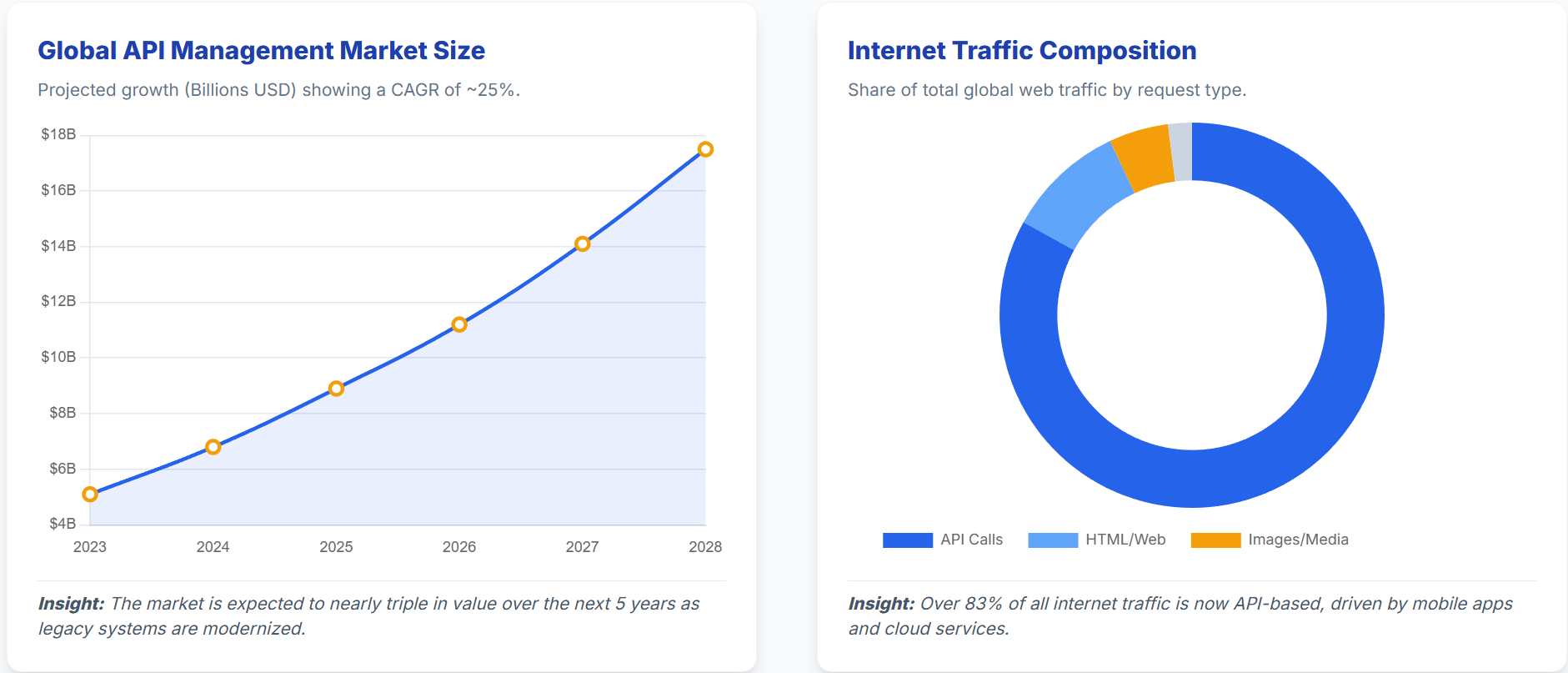
Global API Economy, Strategic Architecture, Monetization Dynamics, and the Evolution of Digital Value Exchange
The contemporary global economy is currently undergoing a structural transformation characterized by the transition from discrete, siloed business operations to a hyper-connected ecosystem of digital assets. At the center of this metamorphosis is the Application Programming Interface (API), a technical artifact that has successfully transcended its origins as a simple software integration tool to become the fundamental driver of digital commerce and boardroom-level strategy. This paradigm shift has birthed the "API economy", a multifaceted global network built upon the controlled, commercial exchange of digital functions and data assets through APIs.

Typing Less, Learning More: Handwriting Boosts Conceptual Scores by Up to 20%
It feels intuitive to use your laptop for taking class notes. Typing is fast, effortless, and lets you capture every word your professor says. But according to learning research, this efficiency is exactly why you should stop doing it.